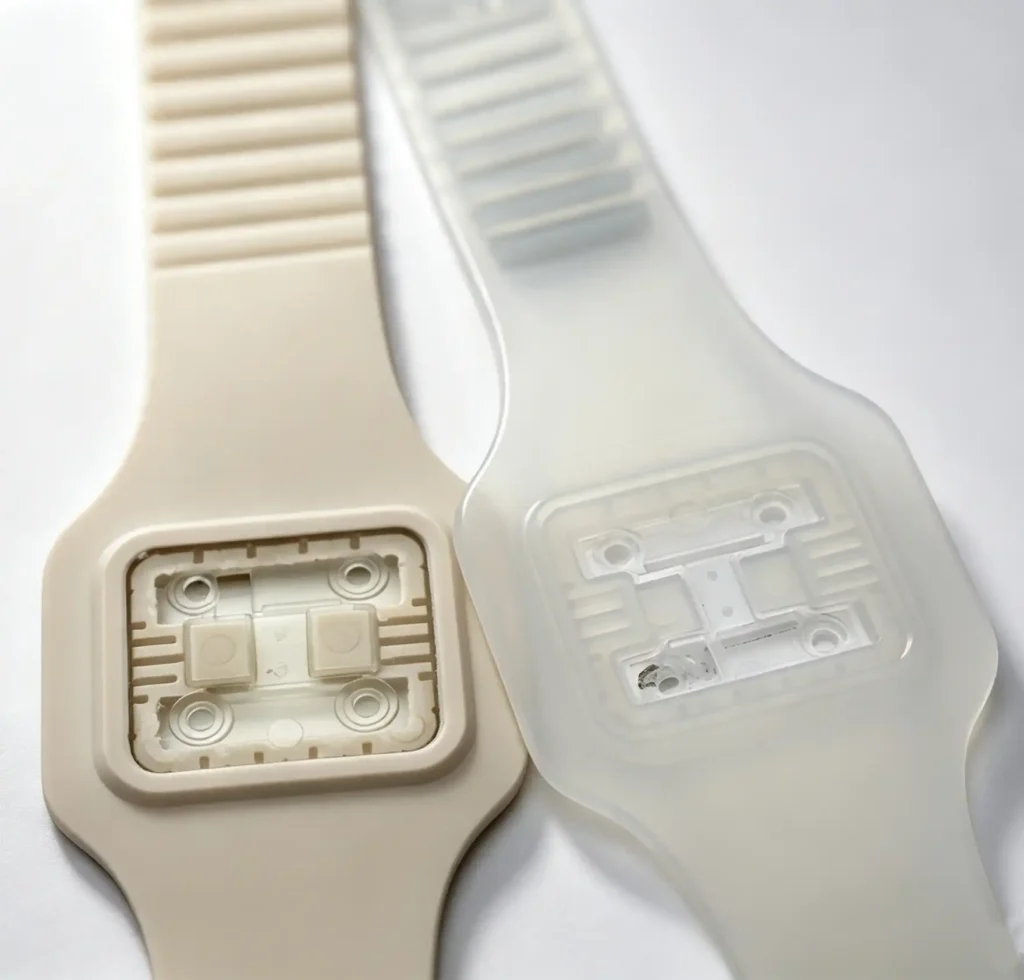
Overmolding is becoming increasingly popular as an alternative to traditional assembly, driven by rising labor costs, especially in smart wearables. We have helped customers turn innovative ideas into real products. Here is the story of our collaboration with a leading massager company, and how we used this advanced process to drive real-world results and technological progress.
Project Background
The customer aimed to develop a smart neck massager strap that is lightweight, flexible, skin-friendly, and assembly-free for the end user.
The primary challenge for this project was the assembly-free requirement: no glue, no snap-fit features, and no visible assembly structures were allowed, with the exception of a designated area that needed to be overmolded onto the massager strap for electronic components. Magnets were the preferred solution due to their quick connect and release capability. They attach automatically through magnetic attraction when brought close, and can be easily separated with a gentle pull or twist using just one hand. Under excessive force, they release automatically to prevent a choking hazard if the device gets caught around the neck—making it an ideal design for the end user. However, this approach conflicted with the overmolding process. The magnets were attracted to the metal tooling, which caused them to shift and made precise positioning difficult. What was more, the high-temperature curing process could weaken their magnetic properties.
Our Solution
We agreed that magnets were the best option for this application. Our focus should be on overmolding the plastic housing and magnet onto the same strap while maintaining stable magnetic performance. We had extensive experience overmolding silicone onto plastic. However, overmolding magnets was new territory for our team. We knew it would be a challenge. We carried out detailed analysis and simulation regarding the material, processing, and inspection before mass production.
Material Selection
We selected a bio-compatible liquid silicone material known for its high softness and excellent flexibility. This material offers superior fluidity, allowing it to accurately fill even the smallest structures. At the same time, we worked with a professional supplier to customize the magnet specifically for this application. The magnet was supplied in an unmagnetized state, thereby eliminating the root cause of the magnet adhering to the steel within the mold and being difficult to position.
Processing Development
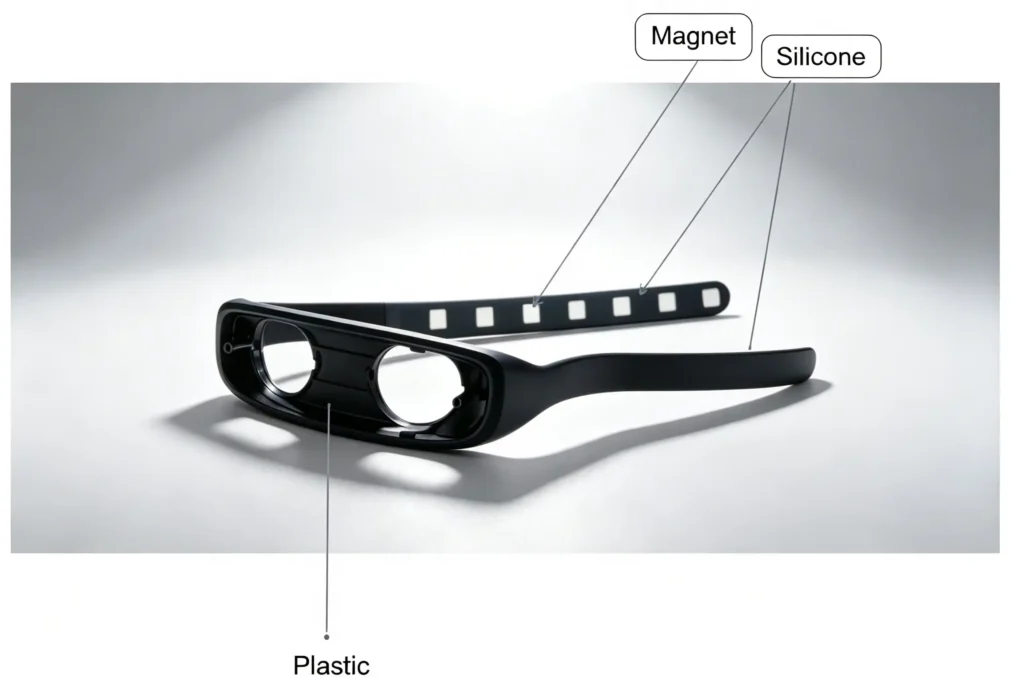
The molding process was the main challenge. We aimed to complete the entire process, including both plastic and magnet overmolding, in a single overmolding step. This proved feasible for the plastic, but not for the magnet. We carried out numerous trials and adjustments to the tooling and parameters, but these did little to resolve the magnet positioning issue. The shift problem could not be solved. As a result, we separated the process into individual steps: first, overmolding liquid silicone onto the plastic to create the strap with locating slots to ensure stable positioning; and then performing a second overmolding onto the strap and magnet. The magnetization process was carried out after overmolding. This not only solved the positioning issue but also ensured the magnet’s performance.
Inspection
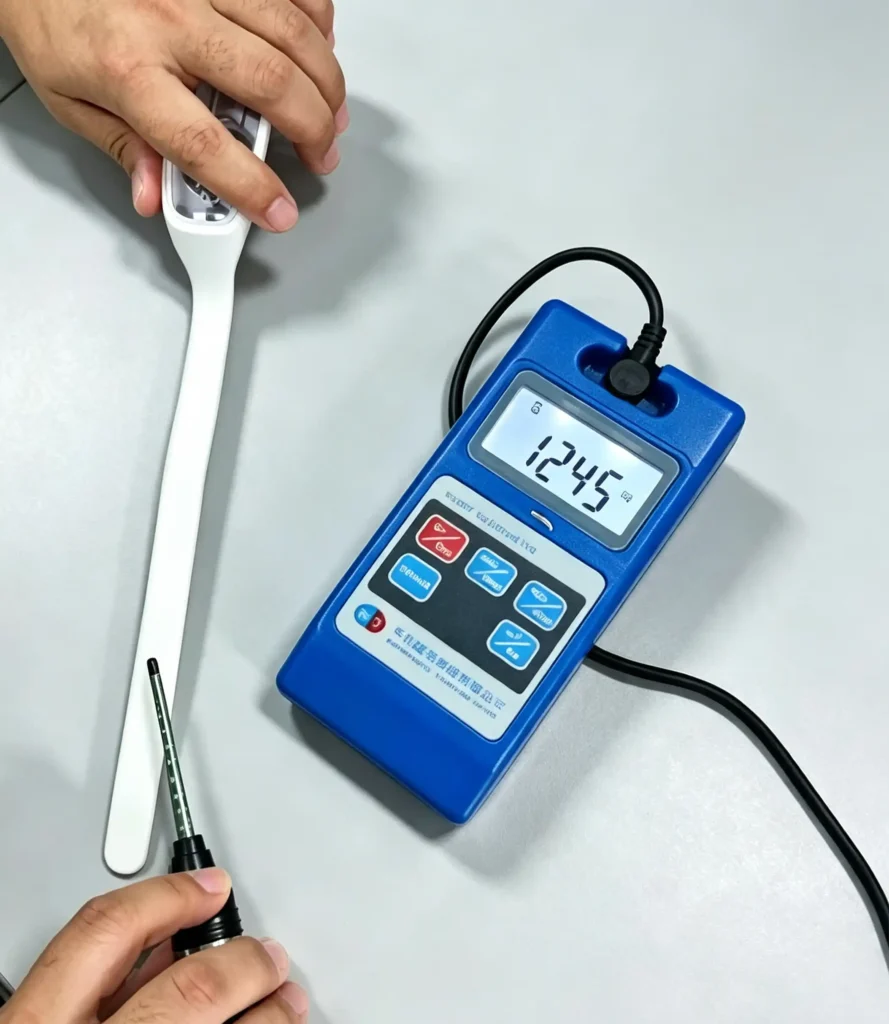
We inspected the final straps and confirmed that they met the customer’s requirements. Both the plastic and the magnet exhibited strong bonding with the liquid silicone material; neither peeling nor exposure was observed. The magnets were accurately positioned within the strap, and this precise positioning ensured proper magnetic performance and product functionality. In addition, the magnets were inspected using a magnetometer, and the measured magnetic flux was exactly as expected.
Through close collaboration with the customer and a professional magnet supplier, we successfully overcame the inherent conflict between magnetic assembly and the overmolding process. By rethinking the manufacturing sequence—separating the overmolding steps and magnetizing the magnets only after molding—we achieved precise magnet positioning, strong material bonding, and reliable magnetic performance. The final smart neck massager strap met all functional and safety requirements, demonstrating that even challenging overmolding applications can be realized through systematic analysis, process innovation, and careful execution. This project further strengthens our capability to support customers in developing next-generation wearable products that are comfortable, durable, and assembly-free.