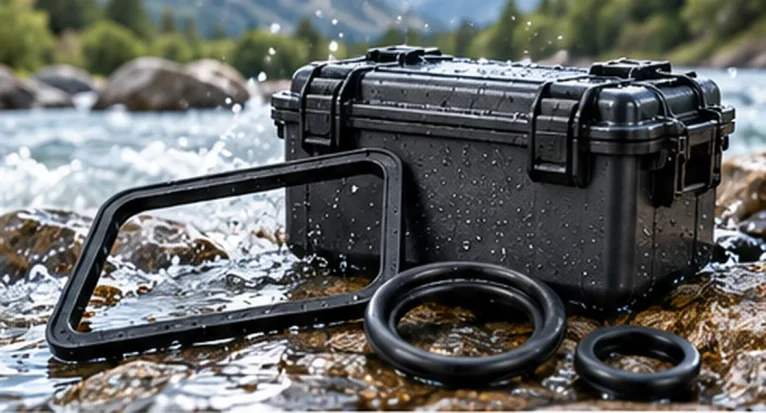
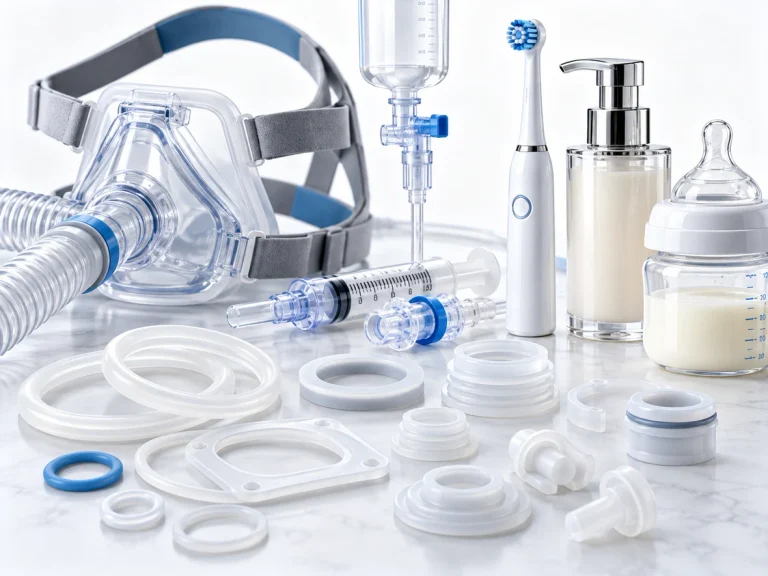
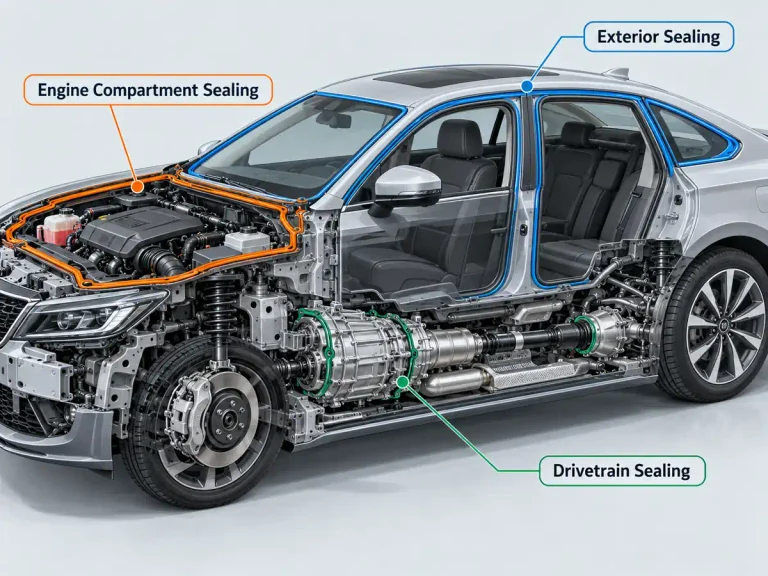
Silicone valves have quietly become a core part of medical devices, food dispensers, and electric vehicles, yet most buyers still struggle to find a partner that can hold tight tolerances and meet food or medical safety rules. A custom silicone valve manufacturer that controls its own tooling and molding usually delivers the consistency that high-volume programs demand, because the same team owns the design feedback, the tool, and the inspection data. A valve that leaks or sticks rarely fails alone; it can pull a whole device off the market, so the sourcing decision carries more weight than the small part suggests.
The ten silicone valve manufacturers worth watching in 2026 are Minivalve International, Vernay Laboratories, Trelleborg Sealing Solutions, Freudenberg Medical, Xiamen Oti Electronic Industry Co., Ltd. (OTI), Apple Rubber Products, Xiamen Better Silicone Rubber, DX Silicone, Rega (Yixing) Technologies, and Qingdao Brother Rubber, chosen for proven liquid silicone rubber molding, the right certifications, and a real range of umbrella, cross-slit, one-way, and duckbill valves.
Here is what sets each one apart and how to judge the rest.
Top 10 silicone valve manufacturers at a glance
| Rank | Manufacturer | Key valve types | Typical applications |
|---|---|---|---|
| 1 | Minivalve International | Duckbill, umbrella | Medical devices, smart appliances |
| 2 | Vernay Laboratories | Lip-geometry (SupraValve) | Drug delivery, EV cooling |
| 3 | Trelleborg Sealing Solutions | Umbrella | Medical, EV battery cooling |
| 4 | Freudenberg Medical | Miniature dispensing | Drug delivery, inhalers, syringes |
| 5 | Xiamen Oti Electronic Industry Co., Ltd. (OTI) | Umbrella, cross-slit, one-way, duckbill | Custom LSR, OEM/ODM full range |
| 6 | Apple Rubber Products | Cross-slit, dispensing | Automotive fuel, irrigation |
| 7 | Xiamen Better Silicone Rubber Co., Ltd. | Duckbill, check | One-way fluid and gas control |
| 8 | DX Silicone | Custom valve components | Consumer, industrial |
| 9 | Rega (Yixing) Technologies Co., Ltd. | Rubber valves and components | Industrial, consumer |
| 10 | Qingdao Brother Rubber Co., Ltd. | Rubber and silicone valves | Volume, cost-sensitive programs |
Why silicone valves are replacing traditional materials
Silicone valves win because the material stays flexible across a wide temperature range, resists chemicals, and seals reliably for millions of cycles without the fatigue that wears out rubber or the cracking that breaks rigid plastic.
What a silicone valve actually does
A silicone valve is a soft, elastic membrane that opens when fluid or gas pushes against it and snaps shut when pressure drops. Most designs allow flow in only one direction, which is why they show up wherever backflow would cause a leak, contamination, or a failed dose. The membrane responds to pressure changes on its own, so there are no springs, no metal parts, and nothing to wear against a seat. That simplicity is also why the parts survive environments that would destroy a mechanical check valve.
Common types of silicone valves
The geometry decides the behavior. The four designs below cover most commercial and industrial needs, and a good supplier will tell you which one fits your cracking pressure and flow rate rather than pushing a single shape.
| Type | How it works | Best for |
| Umbrella valve | A dome-shaped membrane lifts at low pressure and reseals to seal | Sterile, low-pressure systems that need silent one-way liquid or gas control |
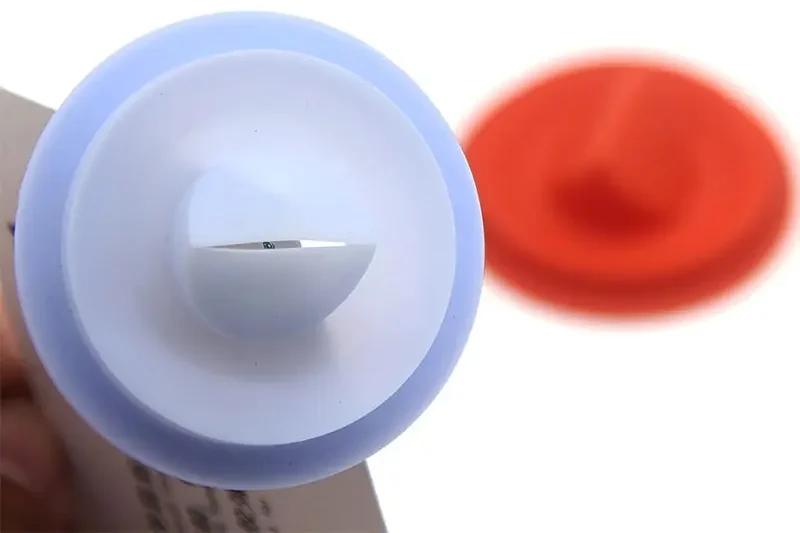
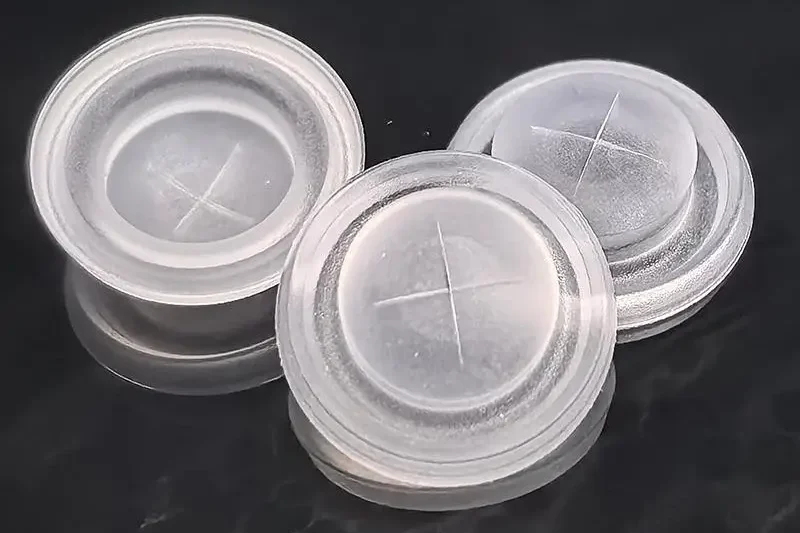
| Cross-slit valve | An X-shaped slit opens under pressure for metering and reseals | Baby bottles, condiments, cosmetics, and anti-drip caps |
| One-way valve | Uses an umbrella or duckbill structure to permit flow in one direction | Pump outlets, air vents, and dispensing points |
| Duckbill check valve | Soft duckbill lips open forward and collapse to block reverse flow | Medical devices and low-maintenance, high-cycle applications |
The slit itself is the part that matters most. Depth, angle, overlap, and edge finish set the opening pressure, the flow curve, and how tightly the valve reseals. Suppliers that validate each geometry with flow testing give you numbers you can design around instead of guesses.
Picking the right shape starts with the cracking pressure, the point where the valve first opens. A cross-slit valve opens at a precise, repeatable pressure that suits dosing, while a duckbill handles higher reverse pressure without leaking. If you are not sure which fits, send the supplier your flow rate and pressure range and let them propose the geometry.
Why silicone over rubber or plastic
Silicone keeps its shape through repeated flexing, which engineers call low compression set. It handles temperatures from roughly -50°C to 200°C, shrugs off many chemicals and UV light, and is inert enough for food and medical contact. Rubber hardens and cracks over time, and rigid plastic cannot flex at all, so silicone is the default when a valve has to open and close millions of times. The tradeoff is cost: silicone parts cost more than molded plastic, but the longer life and lower failure rate usually pay that back inside the product warranty period.
How to choose a reliable silicone valve manufacturer
Choose a silicone valve manufacturer by checking the certifications for your end market, the molding process they use, their customization support, and whether they can scale from prototype to mass production without changing quality.
Certifications and compliance
The certificate you need depends on where the part ends up. Food- and medical-grade silicones must meet rules such as FDA 21 CFR 177.2600 for repeated-use food and medical contact, and buyers should ask for batch-specific test reports rather than a single certificate. Medical device makers look for ISO 13485, body-contact parts may need USP Class VI or ISO 10993 testing, the European market asks for LFGB on food items, and electronics programs need RoHS and REACH documentation. A supplier that shares lot-level traceability is easier to qualify and easier to defend in an audit.
Manufacturing process and precision
Liquid silicone rubber (LSR) injection molding gives the tightest control over slit geometry and wall thickness, which is why it dominates precision valves. Material is prepared by grade and cure system first, with durometers running from about 10A to 90A. Depending on the application, it is then injected into heated molds that vulcanize in seconds. Platinum-cured LSR is the usual choice for valves because it leaves almost no byproducts and stays stable in contact with skin or food. For fuel or hydrocarbon exposure, some shops move to fluorosilicone (FVMQ), which trades a little flexibility for much better chemical resistance. Compression molding still appears for prototypes, but high-volume programs need automated cells with vision inspection, cryogenic deflashing, and laser or die slit cutting. The goal is the same every batch: a clean slit edge, no flash at the seal face, and a repeatable opening pressure.
Customization and OEM/ODM support
Most buyers do not arrive with a finished tool. Strong partners offer design-for-manufacturing feedback, rapid prototyping, and help with material selection before any steel is cut. Decide early whether you need OEM, where you own the mold and the design, or ODM, where the factory develops the geometry and you private-label it. Tooling can move from concept to first parts in about two weeks at capable shops, which shortens the path from sample to signed production order. Good DFM feedback catches wall-thickness and parting-line problems before tooling is cut, which saves both money and weeks of rework. Either way, confirm who holds the tooling and what happens if you switch suppliers.
Production capacity and lead time
A facility that runs multi-cavity LSR tooling can ship thousands of identical valves a day while keeping defect rates at parts per million. Ask about minimum order quantities, how fast they can move from samples to full production, and whether they track each lot. Flexible MOQs matter because they let you start small, validate in the field, and scale without qualifying a second vendor. Stable lead times matter just as much, since a valve is rarely the only part on your line.
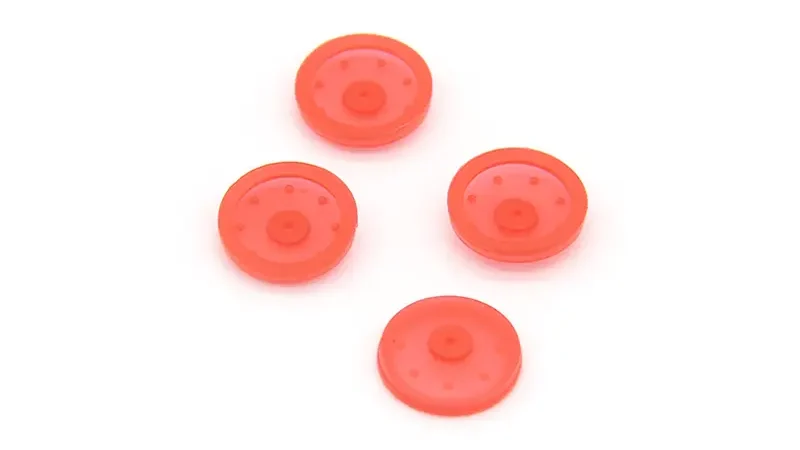
Top 10 silicone valve manufacturers in 2026
This ranking favors suppliers with documented LSR capabilities, relevant certifications, and a proven record in the valve geometries buyers actually need, from micro medical duckbills to high-volume dispensing slits.
1. Minivalve International
Minivalve builds miniature duckbill and umbrella valves for medical and smart-appliance programs, with cleanroom production aimed at life-critical devices. Their parts are rated for over a million cycles and serve applications such as insulin pumps and nebulizers.
2. Vernay Laboratories
Vernay’s SupraValve line uses proprietary lip geometries that hold up through millions of cycles in drug-delivery devices and EV cooling systems. The company is known for engineering support from concept through validation.
3. Trelleborg Sealing Solutions
Trelleborg brings deep polymer expertise to medical-grade umbrella valves that comply with RoHS and REACH, plus EV battery cooling parts. Their global labs run lifecycle prediction so buyers can model long-term performance.
4. Freudenberg Medical
Freudenberg focuses on miniature dispensing valves for drug delivery, molded in cleanrooms for inhalers and syringes. Their R&D pipeline includes hybrid silicone-fluoropolymer blends for tougher chemical exposure.
5. Xiamen Oti Electronic Industry Co., Ltd. (OTI)
OTI runs custom LSR programs as a silicone valve manufacturer across umbrella, cross-slit, one-way, and duckbill valve styles, with OEM and ODM support from prototype to volume. The team handles tooling, material selection, and batch traceability, which suits buyers who need a single partner across the full valve range rather than splitting work across several shops.
6. Apple Rubber Products
Apple Rubber produces cross-slit and dispensing valves for automotive fuel systems and irrigation drippers, using platinum-cured silicone that resists oils, fuels, and UV. Multi-cavity molds push past 10,000 units a day.
7. Xiamen Better Silicone Rubber Co., Ltd.
Xiamen Better supplies silicone duckbill and check valves built for one-way fluid and gas control, with export experience across North America and Europe. Their program covers both standard valve shapes and custom molded assemblies.
8. DX Silicone
DX Silicone offers a broad custom silicone portfolio that includes valve components for consumer and industrial use. The factory supports OEM and ODM work and is a common choice for buyers consolidating several silicone parts with one supplier.
9. Rega (Yixing) Technologies Co., Ltd.
Rega develops silicone rubber valves and components for industrial and consumer applications, with in-house molding and a track record in high-volume export orders. Their strength is steady delivery on established geometries.
10. Qingdao Brother Rubber Co., Ltd.
Qingdao Brother combines rubber and silicone valve production and serves buyers who need volume capacity and flexible ordering. Export experience and broad material knowledge make them a practical option for cost-sensitive programs.
Which industries rely on silicone valves most
Medical and healthcare lead demand, followed by food and beverage, automotive and EV systems, and consumer smart appliances, each pushing different requirements for purity, temperature, and cycle life.
Medical and healthcare
Hospitals and device makers use duckbill valves in catheters and IV sets to stop reflux, umbrella valves in insulin pumps for micro-doses, and cross-slit valves in eye droppers. Biocompatibility and sterilizability are non-negotiable, so this segment drives the strictest certifications and the cleanest production environments.
Food and beverage
Dispensing valves sit in ketchup bottles, baby products, and reusable caps where leak-free, dose-controlled flow matters. Food-grade silicone must meet migration and extraction limits, and the valves have to survive dishwashers and repeated squeezing without taking on odor or flavor.
Automotive and EVs
Under the hood, one-way silicone valves manage crankcase ventilation, fuel vapor recovery, and battery cooling. High-temperature grades endure 150°C and beyond, while low-permeation compounds help vehicles meet emission rules. Electric platforms add battery vent and thermal valves that did not exist a decade ago.
Consumer and smart appliances
Humidifiers, coffee machines, and robot vacuums use cross-slit and umbrella valves to control water and air with no drips or noise. Here the priority is feel, looks, and surviving millions of cycles on a shelf product that a customer judges by how it pours.
| Industry | Common valve type | What it demands |
| Medical and healthcare | Duckbill, umbrella | Biocompatibility, cleanroom molding, ISO 13485 |
| Food and beverage | Cross slit, one way | Food-grade compliance, leak-free dosing |
| Automotive and EVs | One way, umbrella | High temperature, low permeation |
| Consumer appliances | Cross slit, umbrella | Quiet operation, long cycle life |
The same valve rarely serves two industries without changes. A medical duckbill is molded and cleaned differently from an automotive one, and the documentation each program demands is not interchangeable. That is why the manufacturers below tend to specialize instead of claiming to do everything.
What the future holds for silicone valve production
Expect smaller valves, smarter ones with embedded sensing, more bio-based silicone, and far more automation as manufacturers chase parts-per-million defect rates.
Miniaturization and smart valves
Wearables and microfluidics push valves toward smaller slits and tighter tolerances, while some suppliers add sensors that report flow or blockage. Smaller also means the valve can disappear into the product, which designers like, but it raises the cost of any defect because one bad part can scrap a larger assembly. Smart valves that feed data back to a controller are still niche, but they point to a future where the valve is also a sensor.
Sustainability and bio-silicone
Buyers ask for lower-waste processing and bio-based silicone feedstocks. Cold-runner tooling already cuts scrap, and recycled-content compounds are moving from trials into production runs. Regulatory pressure on extractables and end-of-life handling will keep this trend moving even when the material cost is higher.
Automation and Industry 4.0
Robotic demolding, automated optical inspection, and real-time process monitoring lift yield above 99 percent. Lot-level data lets buyers trace a valve from raw polymer to finished part, which shortens qualification and builds trust. As more shops adopt Industry 4.0 tooling, the gap between a premium supplier and a budget one will show up mostly in that data, not in the part itself.
FAQ
Are silicone valves safe for food and medical use?
Yes, when they are made from food- or medical-grade silicone and produced under the right certifications. Look for FDA 21 CFR 177.2600 compliance on food and medical contact parts; ISO 13485 for device manufacturing; and batch test reports that confirm low extractables. Always match the grade to the actual point of contact, not just the marketing label.
What is the difference between a duckbill and an umbrella valve?
A duckbill valve uses soft lips that spread open under forward pressure and pinch shut to block backflow, which suits low-maintenance medical and high-cycle use. An umbrella valve uses a dome membrane that lifts at low pressure and reseats to seal, which fits sterile, low-pressure systems that need quiet one-way control. The choice comes down to cracking pressure, flow volume, and how much dead space your design can tolerate.
How long do silicone valves last in continuous operation?
Life depends on geometry, durometer, and pressure, but well-made LSR valves are rated for millions of cycles. Medical and appliance programs commonly spec parts for one million cycles or more, and suppliers validate this with fatigue and burst testing before release. In real products the limiting factor is usually the surrounding system, not the silicone membrane itself.