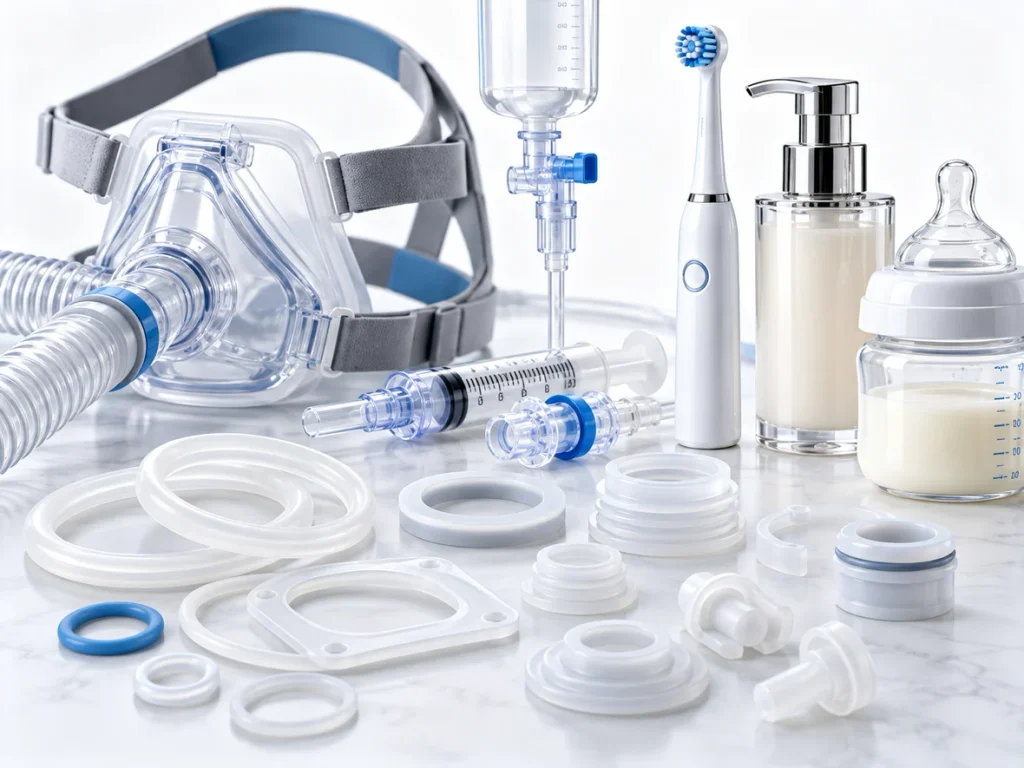
Sealing is one of the least visible jobs in a medical device or a personal-care product, and one of the most consequential. A fluid path that weeps, a mask that will not hold pressure, or a pump head that stiffens after repeated cleaning usually traces back to the same small component. Buyers arrive from two directions and rarely share the same vocabulary: one group is engineering a regulated device and needs a documented biological dossier, while the other is building something that sits on a bathroom shelf or in a nursery and needs a material that stays soft, inert, and clean against skin. Bringing a Silicone Seal Manufacturer in at the drawing stage removes most of the rework that otherwise follows.
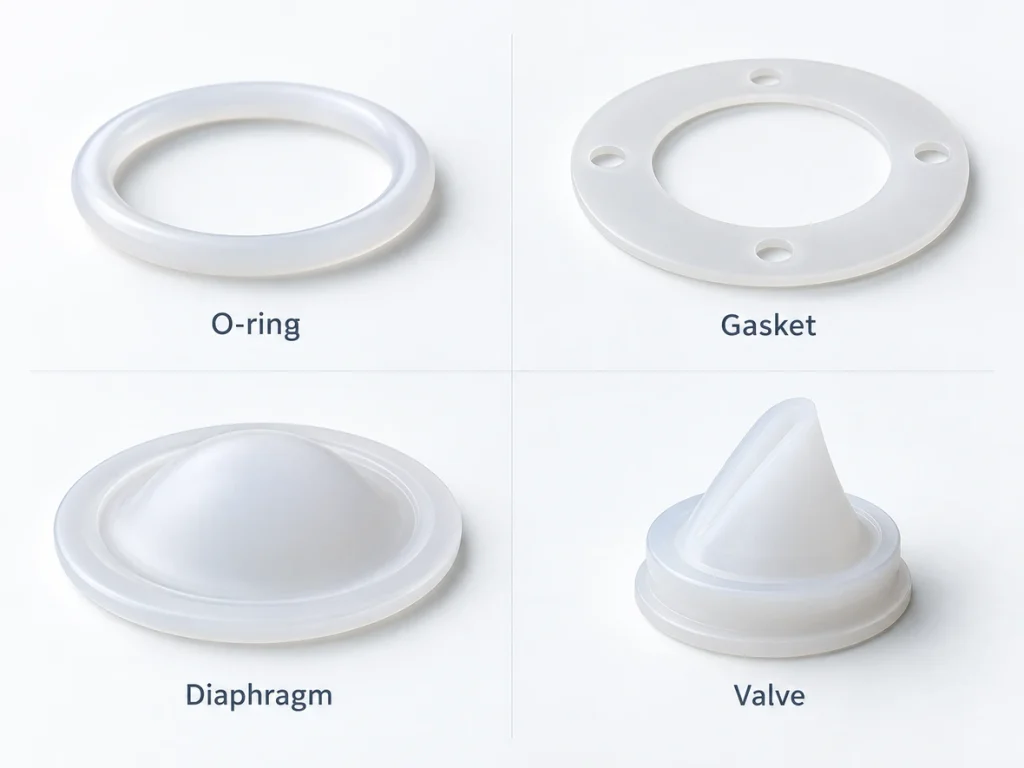
Medical and personal-care silicone seals are elastomeric sealing parts molded from high-purity polydimethylsiloxane compounds and supplied as O-rings, gaskets, diaphragms, and valves. The medical side has to clear biocompatibility and sterilization requirements. The personal-care side has to stay soft, chemically inert, and non-leaching against skin, food, and cosmetic formulations. Both come from the same silicone family and are normally produced by a Silicone Medical Part Manufacturer using platinum-cure chemistry under controlled conditions.
The sections below work through what the grades certify, which part shapes exist, where these seals are used, and how to specify and source them.
What Are Medical and Personal-Care Silicone Seals?
They are sealing components made from silicone elastomers that have been formulated, cured, and documented to a stricter standard than general-purpose silicone. The siloxane backbone is the same in both cases, so the differences sit in compound purity, cure chemistry, the depth of biological testing, and the cleanliness of the molding environment.
The category reads more easily as a chain of evidence than as a single material. A compound qualifies for medical use because a document exists for each link: the ingredients, how the elastomer was cross-linked, which biological tests were run on the cured material, and what controls governed the molding cell.
Difference Between Silicone and Medical-Grade Silicone
General-purpose silicone is a broad commercial label rather than a specification. A commodity compound may contain fillers, pigments, plasticizers, or processing aids that were never assessed for contact with tissue, and it is judged mainly on mechanical performance. Medical-grade silicone starts from the same siloxane chain but is held to a narrow specification: no unapproved additives, platinum-catalyzed addition cure, and a biological test file behind it.
- General-purpose silicone: fillers and processing aids permitted, no biological testing, not designed for sterilization.
- Food-grade silicone: meets food-contact requirements such as 21 CFR 177.2600, with no taste or odor transfer.
- Medical-grade silicone: platinum cure, USP Class VI and ISO 10993 data, tolerant of repeated sterilization.
Food-grade is not automatically medical-grade, so buyers specifying medical grade silicone seals should ask for compound-level evidence rather than a category claim.
Medical Seals vs Personal-Care Seals
The duty changes the specification. A medical seal is judged mainly on leak integrity, sterilization survival, and its biological dossier. A personal-care seal is judged on skin feel, resistance to soaps, oils, and alcohol, color and clarity stability, and the ability to be cleaned hundreds of times without blooming or cracking.
What Makes Silicone Medical Grade?
A silicone becomes medical grade when the compound carries a documented biological safety file, is cross-linked with a platinum catalyst rather than a peroxide, and is molded under process controls that exclude contamination and preserve lot traceability. The label describes a chain of evidence, not a single ingredient.
Three things carry the weight: the purity of the formulation, the cure system, and the evidence package. A supplier can offer a soft, translucent elastomer that looks ideal and still fail to qualify, because one pigment is not on an approved list or the cure leaves acidic residues.
USP Class VI and ISO 10993
USP Class VI is a compound-level screen: three in vivo biological tests applied to a cured sample, used as a baseline for parts with limited skin or fluid contact. ISO 10993 is a device-level evaluation that scales with how and how long a part touches the body, so a short-duration surface-contact part and a permanently implanted part sit at opposite ends of one framework. The test matrix follows the contact category, not the material name.
FDA Compliance and Medical Silicone Regulations
FDA does not approve a silicone material. A compound is compliant when every ingredient appears on the permitted list in 21 CFR 177.2600 and the relevant biological tests are complete. Because marketing language often implies an approval that does not exist, ask for a Declaration of Conformity naming the regulation.
Platinum Cure vs Peroxide Cure
Peroxide curing leaves acidic by-products that a lengthy post-cure must drive off, and even then the leachables profile limits where the material can be used. Platinum addition cure joins vinyl and hydride groups through a catalyst and produces no decomposition by-products, so the elastomer holds a lower extractables level without post-cure. The cost premium runs from fifteen to twenty-five percent, which is why platinum cure is treated as mandatory for long-contact and fluid-path parts.
| Requirement layer | What it evaluates | Typical evidence |
| Compound purity and cure system | Residual by-products, additives, extractables | Platinum-cure declaration, compound datasheet |
| USP Class VI | Acute systemic, intracutaneous, and implantation response | Lot-level biological test report |
| ISO 10993 series | Device-level biocompatibility matched to contact category | Cytotoxicity and sensitization data, risk assessment |
| FDA 21 CFR 177.2600 | Ingredient permissibility for food and medical contact | Declaration of Conformity naming the regulation |
Common Types of Medical Silicone Seals
The parts fall into a small number of families: static seals such as O-rings and gaskets, flexible valves and diaphragms, and custom molded profiles that combine several functions in one piece. Which family you need follows from the motion in the joint and the medium being contained.
A static joint that never moves asks only for compression and recovery. A joint that opens and closes adds fatigue and demands precise slit or lip geometry. Overmolding bonds silicone onto a rigid substrate in the same tool, replacing an assembly step with a single part.
Silicone O-Rings and Static Seals
O-rings and flat gaskets carry the largest share of sealing duty. An O-ring seals through controlled compression in a groove; a gasket seals across a flat face with a wider bearing area. Medical hardware selects the compound above all for compression set, so the part recovers after long periods under load instead of taking a permanent flat. An O-ring is a representative form factor, and the same compound family covers vial stoppers, plunger tips, and connector seals.
Silicone Gaskets and Custom Molded Parts
Custom gaskets appear wherever a standard profile will not fit the housing. Liquid silicone rubber injection molding makes it practical to combine a sealing lip, a locating feature, and a grip surface in one molded part, which removes handling and alignment steps. Wall thickness, draft, and gate position matter more than hardness, so tooling and compound are specified together.
Silicone Valves and Flexible Components
Valves and diaphragms use silicone’s fatigue resistance and its ability to form a thin elastic membrane. Duckbill valves meter flow in one direction, cross-slit valves relieve pressure, and umbrella valves control fluid in both directions. These parts depend on wall thickness and slit dimensions far more than on durometer. A duckbill valve is a common example in infusion and drainage sets.
Applications of Medical and Personal-Care Silicone Seals
These seals are used wherever a soft, inert, sterilizable barrier has to hold a fluid, a gas, or a vacuum. In medical equipment that means fluid paths, ventilation circuits, and sterile packaging. In personal care it means skin-contact hardware, washable devices, and packaging for creams and liquids.
The application decides the specification, not the other way round. A seal that holds sterile air and one that holds a fragrance oil can be molded from the same base polymer yet need different formulation and validation.
Medical Fluid Paths and Sterile Equipment
Infusion sets, syringe components, dialysis circuits, and drainage systems rely on seals that stay leak-tight across repeated sterilization. Sterile fill is a family of its own: vial stoppers, plunger tips, and closure liners must reseal after a needle passes through, so the compound is chosen for low compression set and low coring. Single-use bioprocessing bags add a further demand, since the seal must tolerate irradiation without shedding particles.
Respiratory and Diagnostic Devices
Ventilation, anesthesia, and oxygen delivery depend on seals that hold pressure while staying soft enough to conform to a face. Diagnostic instruments add their own demands, because a seal between an optical path and a fluid channel must stay clear and chemically stable. Builders who need one partner across ventilation, anesthesia, and diagnostic hardware will find the consolidated range under Medical Grade Silicone Manufacturer.
Silicone Seals for Personal-Care Devices
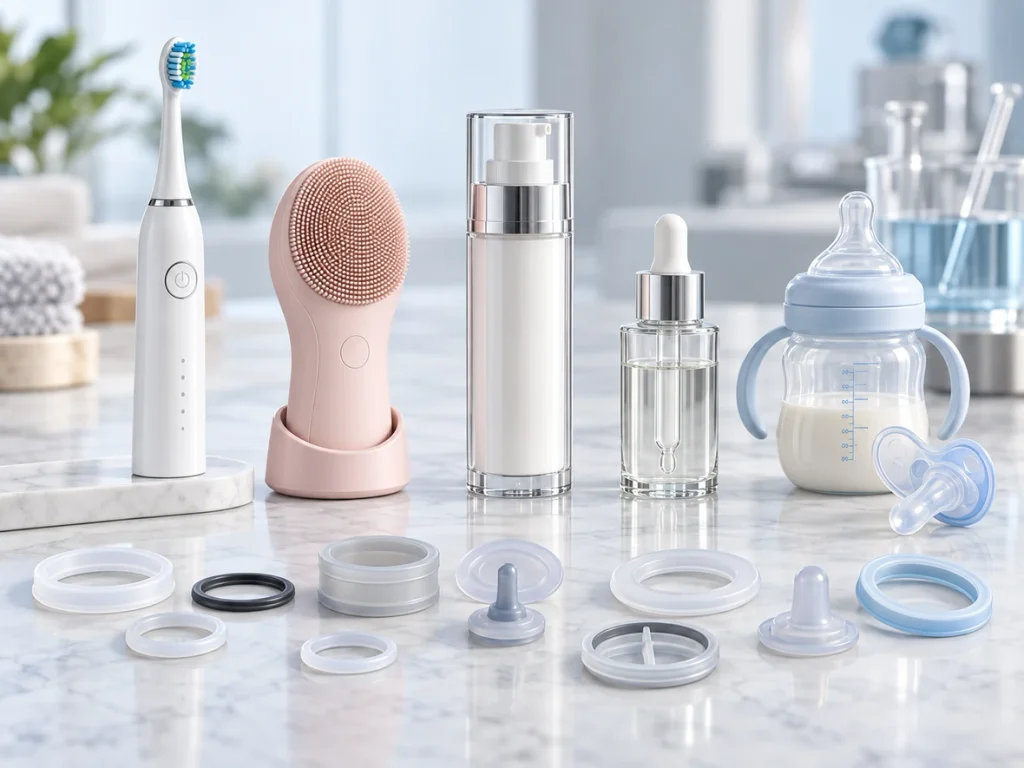
Personal-care hardware runs on the same sealing logic as medical equipment but with a different risk profile. Nothing is implanted and nothing is sterile, yet the seal touches skin, sits in a wet environment, and faces a formula designed to dissolve oils. The duties cluster into five device families.
Electric toothbrushes and oral-care handles. A brush head is rinsed and flexed at the neck every day, so the seal at the shaft has to survive water, toothpaste surfactants, and repeated compression without taking a set. Soft platinum-cure compounds between 30 and 50 Shore A are typical, molded as a lip seal or overmolded onto the handle.
Facial cleansing and skin-care devices. These devices press a soft surface against skin, so the seal doubles as a comfort interface. The compound is chosen for skin feel and for resistance to cleansing gels and alcohol-based toners, and it usually carries a matte or translucent finish that will not yellow under bathroom UV exposure.
Cosmetic dispensers and airless pump heads. An airless pump protects a serum by keeping air out, which means the seal must hold a vacuum without absorbing anything from the formula. Extractables matter here as much as in medical work, because a seal that leaches into a fragrance oil changes the product’s smell. Piston seals, check valves, and wiper lips in this family are molded to tight dimensional tolerances.
Skin-care packaging and closures. Bottle liners, flip-top gaskets, and dropper seals are high-volume, low-cost parts judged on fit and on staying odorless. A liner compound must not take on the scent of the cream it contacts, and it has to reseal after every opening.
Infant and baby-care products. Teats, feeding valves, and pacifier shields sit in a child’s mouth for long periods, so this family is pushed toward low extractables, taste neutrality, and cleanability after boiling or steam. Baby-facing items carry their own expectations, so the infant and maternity program is grouped separately under Maternity and Baby Silicone Solutions.
Across all five families the deciding properties are the same: resistance to soap, oil, and alcohol, low extractables, color and clarity stability, and the ability to be cleaned hundreds of times without blooming, cracking, or hardening. Softness matters, but a seal that starts soft and turns firm within a year has failed the brief.
Is 100 Percent Medical-Grade Silicone Safe?
Medical-grade silicone is safe for its intended contact category, and the phrase one hundred percent adds little. Safety is not a property of the material by itself. It depends on how long the part touches the body, what it touches, and whether both the compound and the finished part were tested for that specific use.
It is more accurate to say that a medical and personal-care silicone seals program is qualified part by part. The same compound can suit a mask cushion and be wrong for a blood-contact valve, not because the elastomer changed but because the contact category changed.
Contact Duration and Testing
Biological evaluation is organized by exposure. A short-duration device with surface contact needs less evidence than a part in prolonged contact with mucosa or blood, and a permanently implanted part needs the fullest series. In practice, a non-implant component with limited surface or externally communicating contact is often defended by USP Class VI data together with cytotoxicity and sensitization results. That package is a defensible baseline, not a license to use the compound anywhere.
Extractables and Leachables
The number that decides most arguments is the extractables profile. Silicone is chemically inert, but a poorly finished part can still release low-molecular-weight siloxanes or residues from an unapproved additive. Two controls suppress that risk. The cure system is the first, since platinum addition cure leaves nothing to drive off. Finishing discipline is the second, because a clean compound molded with contaminated handling or packed in the wrong liner inherits a contamination problem it never had.
How to Select Medical Silicone Seals
Selection narrows to four parameters: hardness, compression set, the temperature window, and the sterilization method the finished part will see. Get those four right and the seal will perform. Get any one wrong and no amount of compound purity will compensate.
Durometer and Compression Set
Hardness is quoted in Shore A and typically runs from about 30 to 80 for sealing work, with softer compounds used where the seal must conform to an irregular face. Two habits avoid most disputes. State the tolerance, since plus or minus 5 is common and plus or minus 3 is used for precision parts. Then name the test method and reading time, because an instantaneous and a delayed reading differ by roughly three to five points on the same material. Compression set matters most on static seals held under constant load, where a high value means the seal takes a permanent flat and weeps.
Temperature and Sterilization Compatibility
Silicone tolerates every mainstream sterilization method, so the choice usually follows the device and its packaging rather than the elastomer.
| Sterilization method | Typical conditions | Silicone compatibility | Points to watch |
| Steam autoclave | 121 to 134 C saturated steam | Excellent, hundreds of cycles | Dry cycles stress other components, not the seal |
| Ethylene oxide | 30 to 60 C gas exposure | Good | Residues can be trapped, so allow an aeration period |
| Gamma irradiation | 25 to 50 kGy | Good | Minor cross-linking and slight color shift possible |
| Electron beam | High dose, short exposure | Good | Dose mapping needed on thick sections |
Reusable devices generally settle on steam and disposable devices on irradiation or ethylene oxide. What the seal needs is a stated cycle count, because validation covers a number of cycles, not an unlimited future.
How Medical Silicone Seals Are Manufactured
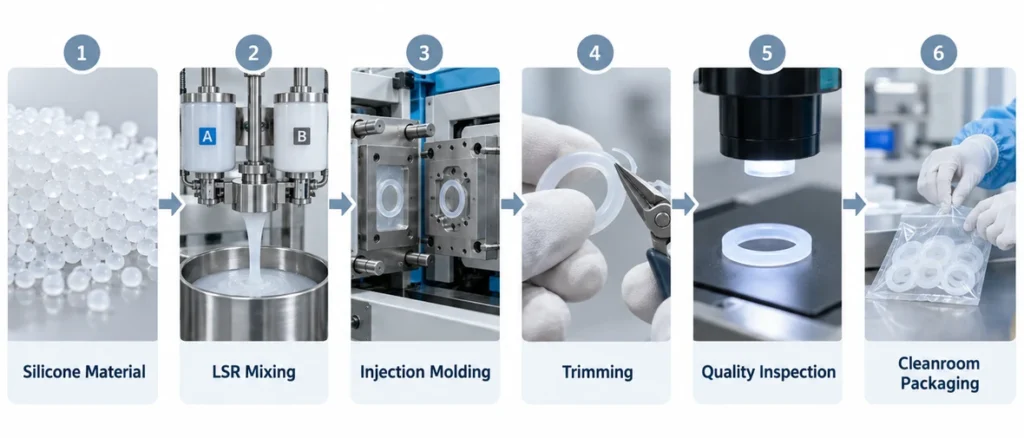
Production is a match between part geometry, annual volume, and tolerance. Liquid silicone rubber injection molding covers high-volume precision parts, compression and transfer molding cover lower volumes and thicker sections, and extrusion covers continuous profiles. Medical work then adds cleanroom molding and lot traceability.
Process choice follows volume and geometry rather than preference, not the other way round.
LSR Injection Molding
Liquid silicone rubber arrives as two components that are mixed and metered at the press. The material enters a temperature-controlled cold runner and cures in a heated cavity within seconds, which allows automation, short cycles, and tolerances near plus or minus 0.05 mm on well-designed parts. Micro-molding, a subset of the same process, handles parts weighing under a gram, where many valves and drug-delivery components sit.
Compression and Transfer Molding
Compression and transfer molding suit thicker sections, lower volumes, and large flat gaskets where tooling economy matters more than cycle time. Both use pre-formed material cured in a heated tool, and both remain the practical answer when a part is too thick for a cold runner to fill cleanly.
Cleanroom Production and Traceability
Medical molding normally runs in a controlled environment, with ISO 14644-1 Class 7 as the usual target and Class 8 acceptable where the device builder cleans and sterilizes downstream. Cleanroom class is only half of the control. Lot traceability, process records, and material certificates are what let a device builder answer a query months later, and they are usually summarized in one place, as they are under Silicone Manufacturing Certifications.
Specifying and Sourcing Medical Silicone Seals
A specification is complete when it names the compound, the hardness and its tolerance, the sterilization method, the contact category, and the cleanliness of the packaging. Sourcing then becomes a documentation exercise rather than a leap of faith.
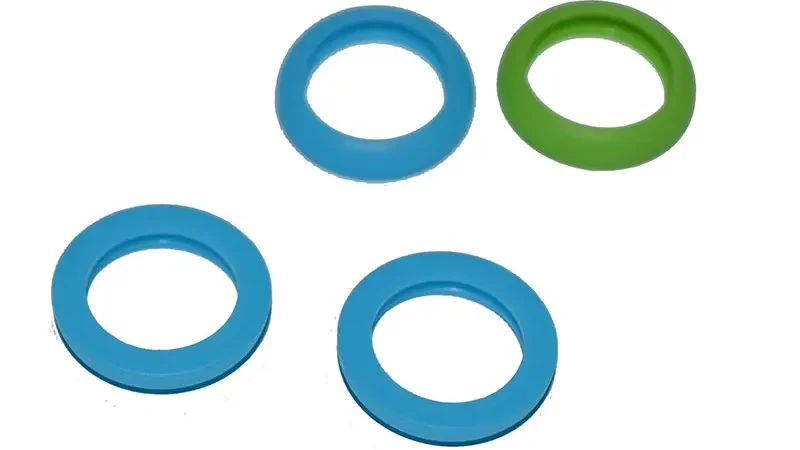
Because the requirements diverge, medical and personal-care silicone seals are usually written as two specification tracks even when one supplier molds both.
Specification Checklist
Work through these items before issuing an inquiry:
- Compound grade and cure system, stated as platinum addition cure where long or fluid contact is expected.
- Hardness with its tolerance, the test method, and the reading time.
- Compression set target for static seals held under permanent load.
- Continuous service temperature range, including peaks during cleaning.
- Sterilization method and the number of cycles the part must survive.
- Contact category, and the biological tests that follow from it.
- Cleanroom class, packaging format, and the traceability each lot must carry.
Supplier Qualification
Qualification is mostly a documentation review. Look for a quality system certificate scoped to the actual process, compound-level biological data rather than a finished-part claim, documented cleanroom capability, and sampling that produces a prototype before tooling is cut.
FAQ
Are medical-grade and food-grade silicone seals interchangeable?
No. Food-grade silicone meets food-contact requirements, while medical-grade silicone adds a biological test file and platinum cure. A compound can pass 21 CFR 177.2600 and still fail USP Class VI, so a food-grade part should never be substituted without biological evidence.
Can medical silicone seals be sterilized and reused?
It depends on the device and on the cycle count the seal was validated for, not on the elastomer alone. Steam autoclave is tolerated for many cycles and suits reusable hardware, while single-use parts are usually irradiated or ethylene oxide treated once.
How is durometer specified for a personal-care silicone seal?
State the hardness, the tolerance, and the test method, because an instantaneous and a delayed reading differ by three to five points. Soft skin-contact parts commonly sit between 20 and 40 Shore A, while seals that must resist compression over a long life are usually firmer.