An enclosure that weeps after its first dishwasher cycle, a camera window that fogs in a pocket, a reservoir that leaves a taste in the morning coffee. Silicone holds its elasticity from roughly minus 50 to 200 degrees Celsius and resists moisture and most household chemistry, but what fails in these products is rarely the compound. It is the match between one seal and one assembly, and that match is usually settled after the housing and the cleaning regime are fixed. Involving a silicone seal manufacturer before the enclosure is frozen costs less than re-cutting a groove after a field return.
Silicone seals are safe for consumer electronics and appliances when three things line up: the cure system releases nothing that attacks what it touches, the geometry holds compression across the service band, and the grade meets the contact rules of wherever it sits. An addition-cure compound suits anything near a board, a molded gasket or O-ring carries the duty in hot, cold and wet zones, and a food-contact or flame-rated grade covers the rest. Where a gasket, a keypad and a bonded shell must share one tolerance chain, the package usually comes from a silicone overmolded parts manufacturer.
The material question comes first, then the assembly, then the geometry, then how to prove the choice.

What Makes Silicone Seals Safe for Electronics?
Not every silicone belongs near a circuit. What decides it is what a compound releases while curing, what it gives off afterwards, and how well it insulates. A compound suited to a bathroom joint can corrode a copper track inside a sealed enclosure.
The families built this way, from grommets to overmolded shells, sit under silicone LSR solutions for electronic. Settling the material question first avoids the most expensive mistake in a program: a corrosion or fogging problem found after the tool is cut.
Why the Cure System Decides Electronics Compatibility
Silicone cures by one of two routes, and the route decides what leaves the compound. An addition-cure compound links its chains without releasing a byproduct, so nothing volatile or acidic stays inside a closed housing. A condensation-cure compound needs moisture and releases something on the way; in the acetoxy variant that is acetic acid, which attacks copper, silver and solder. Addition cure also satisfies the restricted-substance rules now applied to electrical and electronic equipment, since the process tolerates no sulfur, tin, amine or phthalate contamination.

| Cure system | What is released while curing | Compatibility with electronics | Where it is normally used |
| Addition, platinum-catalyzed | Nothing released; no acid byproduct | Highest, provided the molding area is free of sulfur, tin and amine contamination | Gaskets and keypads against populated boards, optical windows, sealed enclosures |
| Condensation, acetoxy | Acetic acid | Poor in a closed space; corrodes copper, silver and solder | Glazing and sanitary joints that stay open to air |
| Condensation, alkoxy | Alcohol | Moderate; slow, and limited by how much moisture reaches the joint | Joints near painted or sensitive metal that cannot tolerate acid |
Outgassing, Odor and Transfer to Sensitive Surfaces
A cured part is not an inert part. Volatile residues from the polymer, the catalyst and the additives stay in the molding until post-curing drives them out. In an open cavity that is harmless; in a sealed one the residue condenses on the coolest surface, often a lens or a display window, and the same mechanism carries taste and odor into a reservoir or a food compartment. A platinum-cured compound, a fumed-silica filler system and a defined post-cure remove most of the risk.
Insulation, Heat Paths and Flame Requirements
Silicone needs neither carbon black nor plasticizers to be useful, so one compound can be transparent, colorless and highly insulating at once, which makes it usable for cable entry grommets, connector seals and button boots. Heat is the opposite duty: a ceramic-filled conductive grade moves heat as well as sealing, but it is a different compound. Flame performance is likewise a compound decision, so an assembly close to a battery pack or a power board normally needs a flame-rated grade.
Matching Silicone Seals to the Appliance or Device
Fit the seal to the assembly it protects, not to the shape it takes. A refrigerator door gasket, a dishwasher door seal and a camera window gasket are the same elastomer doing three different jobs, and the load at each position sets the specification.
Four questions settle most of it: what reaches the seam, how hot it gets, whether the part touches food, and whether it must be serviceable.

Enclosure Seals and Ingress Protection
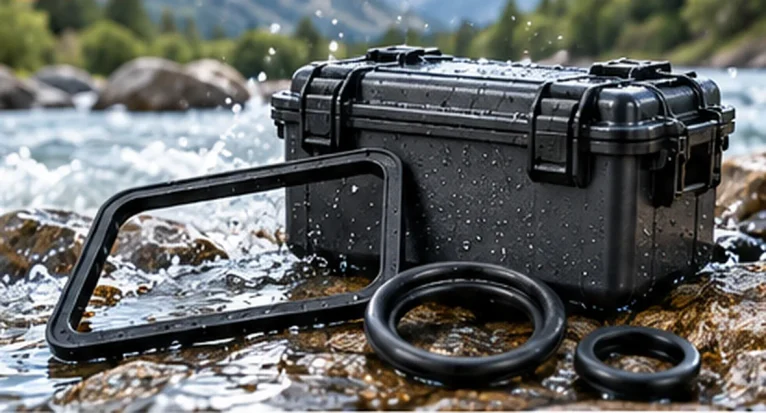
A static enclosure seal is judged by the ingress protection code, which states two things in one number. The first digit covers solids and the second covers liquids, so IP67 means dust cannot enter and the assembly survives temporary immersion. The code applies to the finished assembly, not to the gasket. Squeeze and load path decide whether the assembly earns its target, and cross-section consistency, groove depth tolerance and the flatness of the two faces matter more than the durometer on a data sheet.
Seals Behind Heat: Cooking Appliances and Steam
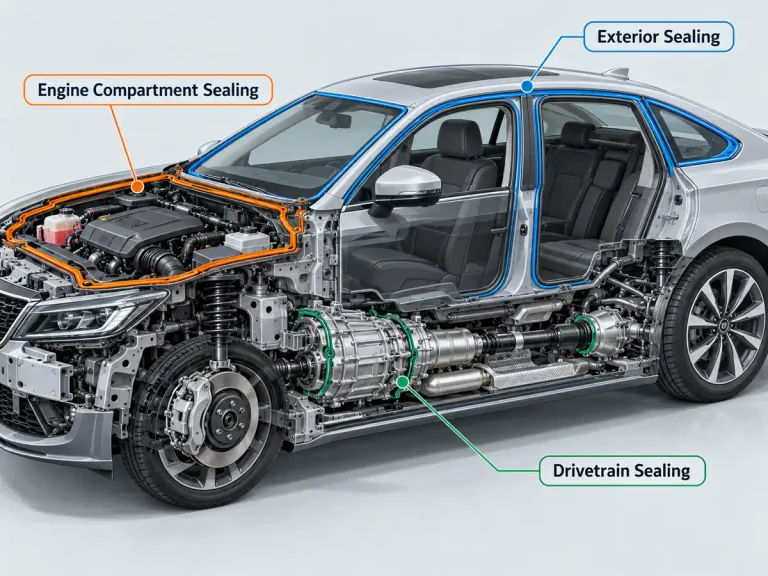
Oven doors, air fryer baskets, steamers and microwave door seals see repeated heating and cooling rather than one steady temperature. A silicone door seal is normally specified for continuous service around 200 degrees Celsius with short excursions above 250, but the peak figure is not what ends its life. Compression set is, the slow loss of the ability to spring back, accumulated over thousands of door openings at temperature. Dishwashers and washing machines add hot water, steam and alkaline detergent, where the failure is usually mechanical rather than chemical. The same materials cover steam and detergent across home appliance silicone LSR solutions.
Cold, Food-Contact and Drinking-Water Zones
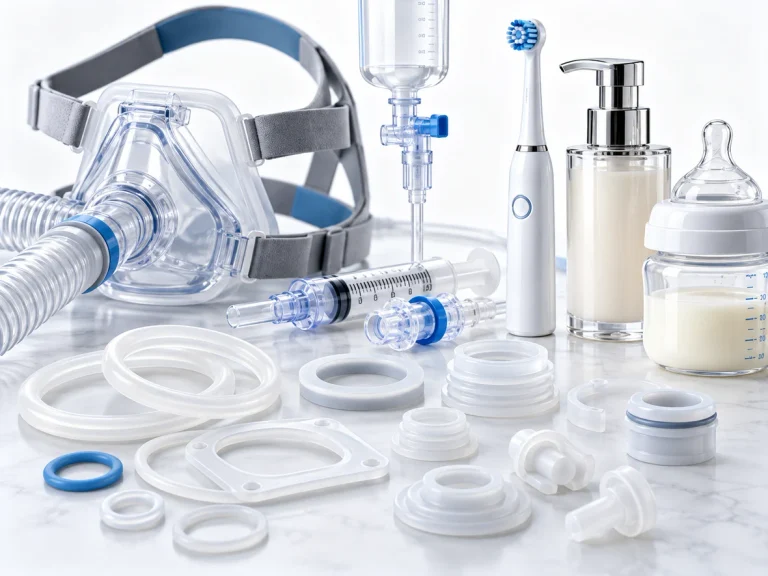
Silicone seals are used inside refrigerators and freezers, and cold is not the difficulty. The material stays flexible well below freezer temperature, with common grades rated to about minus 50 degrees Celsius, so a door still closes on a soft gasket after a decade. Three constraints matter more: the gasket must hold its compression set under a door left shut for weeks, it must stay free of odor, and any part touching food must be made to a food-contact specification. Rubber articles intended for repeated use are regulated by limiting what can migrate out of the finished part under defined test conditions.
Control Surfaces, Wearables and Overmolded Interfaces
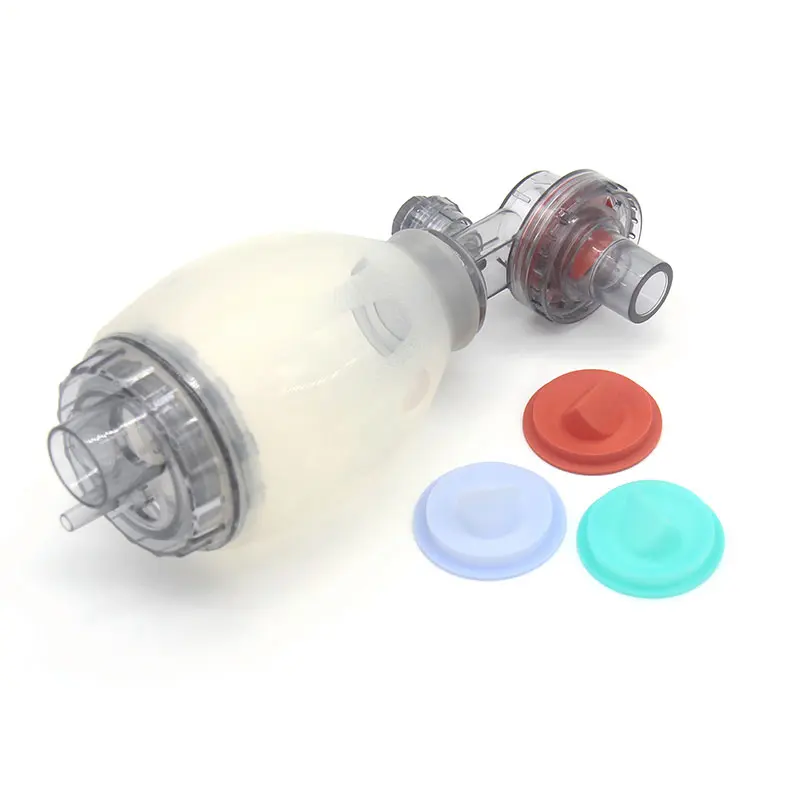
Buttons, keypads, rockers and switches put a seal where it has to survive a user rather than the environment. The duty is a long actuation life at a controlled force combined with enough sealing to keep the interior dry, so a keypad and a membrane switch are evaluated as alternatives rather than substitutes. Portable devices add sweat, sunscreen and alcohol-based cleaners, all mild for silicone but hostile to the adhesive that often holds a gasket in place.
| Device or assembly area | Sealing duty | Seal format that usually fits | What governs the design |
| Phone, tablet or camera window | Block dust and water at a stated level | Thin molded gasket in a machined groove | Groove tolerance and squeeze; the rating belongs to the assembly |
| Cable entry and connector interface | Seal and insulate at one point | Grommet or boot, often overmolded onto the cable | Wall thickness around the conductor and strain relief during assembly |
| Oven, air fryer or microwave door | Thermal cycling without losing springback | Molded door seal on a rigid carrier | Compression set over cycles, not peak temperature |
| Dishwasher or washing machine door | Hot, alkaline and wet at one seam | Molded door gasket, sometimes another elastomer | Detergent resistance and residue build-up at the sealing line |
| Refrigerator, freezer or ice maker | Long static compression in the cold | Extruded door gasket or molded ring | Compression set under sustained squeeze and odor neutrality |
| Coffee maker, kettle or water purifier | Food and drinking-water contact with heat | Food-contact gasket, ring or valve | Migration limits on the finished part and a defined post-cure |
Overmolded Seals or Separate Gaskets?
The same sealing function can be delivered two ways: a gasket dropped into a groove, or silicone molded onto the housing so the two become one part. The decision turns on assembly steps, the tolerance chain, and how many leak paths the design is prepared to own.
Both answers are right in the right product, so the useful question is which failure modes a program can afford to carry.

When a Separate Gasket Is the Better Answer
A separate gasket keeps silicone seals replaceable, which matters wherever a unit is opened in the field, because the seal is renewed instead of the whole assembly being scrapped. Large flat spans such as a display bezel are easier to seal with a gasket that follows the whole perimeter than with a molded lip filled across a long flow path. And where the housing cannot survive the molding cycle, a separate part is the only route. Which format fits a given gap is itself a decision, set out in the format comparison in silicone seal strips gaskets and o-rings.
When Overmolding Removes a Part
Overmolding earns its place when assembly is the risk. A gasket that can be fitted rotated, folded or upside down is a gasket that will eventually be fitted that way, and molding the seal onto the housing removes that possibility along with the step. Removing the step removes a joint line too, which reduces the number of places the seam can leak from. The trade is that a bonded interface replaces a compressed one, so performance depends on adhesion rather than squeeze.
What Changes in Tooling, Assembly and Validation
A separate gasket needs one seal tool, while an overmolded assembly needs a substrate and a molding step, but assembly then loses a part, a handling step and an inspection point. The substrate must survive the molding cycle, which is where a low-viscosity liquid silicone injection process helps, because it fills thin sections at lower pressure than compression molding. The validation plan changes too, since a failed bond scraps the assembly rather than the gasket.
Qualifying Silicone Seals Before Volume Production
A material certificate describes a compound, not a seal. It cannot say whether the part still holds after two years of thermal cycling, whether it leaches into a reservoir, or whether the gasket stays seated after shipping.
The purpose is to fail early and cheaply, on a first article rather than on a container of finished goods.

The Test Matrix That Reflects Real Use
A useful matrix starts from the product’s own duty and then adds the conditioning that makes the test hard.
| Test | What it simulates | Typical condition | Acceptance signal |
| Ingress protection | Water and dust reaching the seam | The target level on the complete assembly, after conditioning | No ingress at the stated level, and not only when new |
| Thermal cycling | Housing and seal expanding at different rates | Repeated cycles across the full operating band | No permanent deformation, no measurable leak afterwards |
| Heat aging under compression | Years at temperature while squeezed | Sustained heat with the seal held at working compression | Springback recovered within an agreed limit |
| Steam and detergent cycling | Dishwasher and laundry duty | Repeated hot, alkaline cycles on the assembled unit | No swelling, cracking or hardening at the sealing line |
| Migration and odor | Transfer into water, food or cavity air | Food-contact conditions on the finished part | Inside migration limits, no detectable odor |
One sequence is routinely inverted: the ingress test belongs after the thermal and detergent cycles, not before.
First Articles on Production Substrates
An overmolded seal or an adhesive-mounted gasket should be qualified on the substrate it will really touch, from the tool that will really produce it, because a laboratory plaque has a different surface from an injection-molded housing carrying mold release. Measure the seal in the assembled state, since what decides whether an enclosure seals is the compression actually achieved, not the nominal dimensions of a loose part.
Documentation That Travels With the Part
The paperwork is part of the product. A drawing should carry the seal’s critical dimensions, the squeeze target and the tolerance that applies to a soft part. A material sheet should name the cure system rather than a trade description, and state which compliance claim is being made. A batch record should show the cure and post-cure parameters actually used. Keep a sealed, dated reference sample of the approved first article.
FAQ
Do silicone seals need a primer to bond to a plastic or metal housing?
Only where the surface cannot present a reactive group to the compound. Glass, anodized aluminum, stainless steel and most ceramics accept an addition-cure compound without help, while low-energy plastics and aged or contaminated metal need a primer or a surface activation step. The answer is settled by a pull or peel test on the production substrate.
Can one silicone grade serve both the food-contact zone and the electronic zone of one appliance?
Often yes, because the food-contact specification is the stricter of the two on composition. The limits appear when the electronic zone needs something the food-contact zone cannot carry, such as flame rating or thermal conductivity, because those come from an additive package that changes the compound. Where one cavity needs both, ask for both claims on the same batch record.
How is a silicone seal tested for drop and shipping vibration?
On the assembled unit, packaged the way it will ship, followed by a repeat of the ingress or leak test. Testing the seal alone misses what happens in transit, which is a housing flexing enough to roll the gasket out of its groove while nothing breaks. The drop, then vibration, then the leak check catches it before a container is loaded.
Can a silicone seal sit next to a lithium battery pack or another heat source?
Yes, because a silicone seal does not soften at the temperatures a pack reaches and does not add fuel the way a hydrocarbon elastomer can. A flame-rated compound carries a different additive package from a general-purpose one, so the rating has to be specified. The seal is also not a thermal barrier; its job is to keep the seam closed while a separate part manages the heat.
How can I confirm that a supplied seal was made from an addition-cure compound?
Ask for the cure system on the material sheet rather than a trade name, then check three signals on the delivered part. Hardness should read consistently across a cut section, which a poorly mixed condensation-cure part often does not. A fresh cut should not smell of acid. A copper coupon left in contact with the part in a closed container should also come out clean.