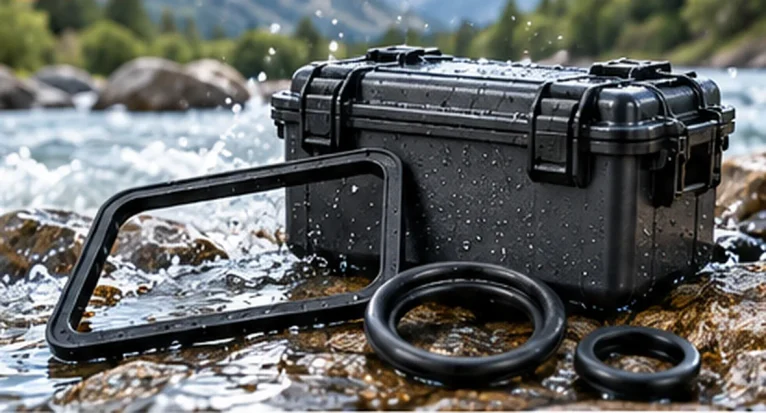
Choosing a silicone seal sounds simple until the part fails in service. A strip that lifts out of its channel, a gasket that takes a permanent set, an O-ring that extrudes through a clearance gap—each of these failures traces back to a specification decision made before the order was placed. Procurement teams and engineers who buy silicone seals for food equipment, electronics enclosures, vehicles, or medical devices all face the same question: which form of silicone seal, which gap, and how should it be installed so it lasts?
The direct answer: pick the form factor by geometry first—a silicone seal strip for long linear joints, silicone seal tape for wraps and irregular shapes, a silicone seal gasket for flat flange faces, and a silicone seal ring for machined grooves. Then fix four specifications: Shore A hardness matched to pressure and surface condition, a temperature range beyond your worst case, a compression set rating low enough for the duty cycle, and certifications that match your market. Working with a Hersteller von maßgefertigten Silikondichtungen makes these four easier to lock down, because a supplier who extrudes and molds silicone can adjust the profile, hardness, and cure system to the application instead of forcing you to adapt to a catalog part.
The rest of this guide compares the four form factors, explains the specs that decide sealing performance, walks through installation by seal type, and lists what to include in a custom RFQ.
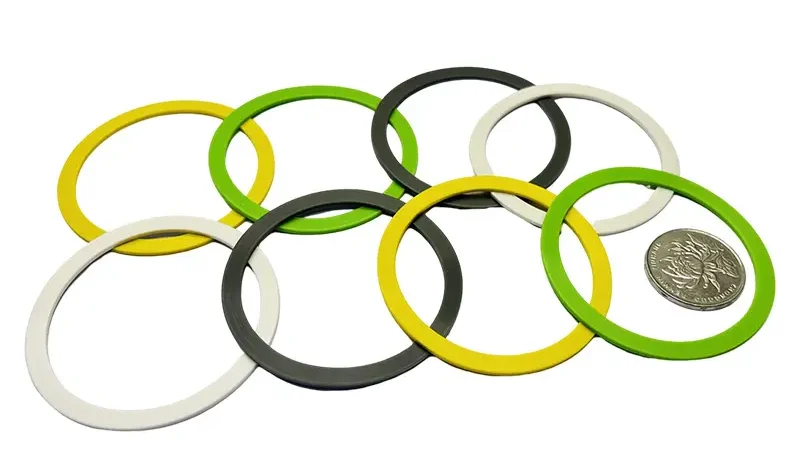
Silicone seal types: strip, tape, gasket and O-ring
Each form factor solves a different geometry problem. A silicone seal strip is a continuous profile, solid or sponge, that fills a long straight or gently curved joint. Silicone seal tape is usually a self-fusing roll wrapped around joints, hoses, and cables. A silicone seal gasket is a flat or molded sheet cut to sit between two flanges. A silicone seal ring, commonly called an O-ring, is a torus seated in a machined groove and compressed between two faces.
How the four form factors compare
| Form factor | Structure | Typical job | Installed by | Main limitation |
|---|---|---|---|---|
| Silikondichtungsstreifen | Extruded solid or sponge profile, adhesive-backed or slide-in | Long linear joints: doors, panels, enclosures | Adhesive, channel, or clips | Adhesion fails on dirty or porous surfaces |
| Silikon-Dichtungsband | Self-fusing roll, no adhesive | Wrapping joints, hoses, cables, emergency repairs | Hand-wrapped, fuses to itself | Permanent once applied; not a thread sealant |
| Silikondichtung | Flat die-cut sheet or molded shape | Static sealing between flange faces | Clamped between faces | Needs flat surfaces and even bolt load |
| Silicone seal ring (O-ring) | Molded torus | Static and dynamic sealing in machined grooves | Dropped into a groove | Groove dimensions and clearances must be right |
How silicone compares with EPDM and neoprene
Silicone is not the only rubber on the shelf, and it is not always the right one. The comparison usually comes down to temperature, weathering, and cost.
| Eigenschaft | Silikon | EPDM | Neoprene |
|---|---|---|---|
| Typical service temperature | About −60°C to +230°C | About −40°C to +130°C | About −35°C to +100°C |
| UV and ozone resistance | Hervorragend | Hervorragend | Gut |
| Compression set | Low, good recovery | Niedrig bis mittel | Medium |
| Oil and fuel resistance | Schlecht | Schlecht | Gut |
| Food-grade availability | Widely available | Limited | Rare |
| Relative cost | Höher | Nach unten | Mäßig |
Read the table by application, not by column. Silicone wins wherever heat, cold, sunlight, or food contact is involved, which is why oven doors, outdoor enclosures, and food equipment specify it. Neoprene holds up better against oils and fuels. EPDM covers moderate outdoor service at a lower price. If none of those extremes apply, a cheaper polymer may do the job just as well.
Key specs that decide sealing performance
Four specifications carry most of the decision: hardness, temperature range, compression set, and certification. Get these right and the seal will do its job for years. Get them wrong and no installation method will rescue the part.
Hardness (Shore A)
Hardness is measured on the Shore A scale defined by ASTM D2240, the standard test method for rubber hardness. The scale runs from very soft to very firm, and most commercial silicone seal parts fall between 30 and 80.
| Shore A range | Feel | Typical use |
|---|---|---|
| 30–45 | Soft | Low-clamp-force seals, uneven or fragile surfaces, cushioning |
| 45–60 | Medium | General gaskets and strips, enclosure doors |
| 60–75 | Firm | O-rings under pressure, profiles that must resist extrusion |
| 75–80+ | Very firm | Load-bearing positions, high-pressure service |
The selection logic is a trade-off, not a ranking. Softer material conforms to rough or slightly warped surfaces and seals with less clamping force. Firmer material holds its shape under load and resists being squeezed through clearances. A common default for general-purpose gaskets is 50–60 Shore A, and around 70 for O-rings, then adjusted after testing on the real assembly.
Temperature range and compression set
Standard silicone rubber typically serves from about −60 °C up to +230 °C, with special grades extending beyond that. Two cautions apply. First, mechanical properties change across the range: a compound may stay elastic at −40 °C but leak at −60 °C, so check low-temperature flexibility data rather than assuming the rating covers service. Second, sustained peak temperature ages the material faster than the rating alone suggests, so leave a margin above your worst case instead of sizing to it.
Compression set measures how much of the squeeze a seal never recovers. A gasket clamped for a year that springs back most of its thickness keeps sealing; one that takes a set leaves a gap the moment the flange loosens or the equipment cycles. Silicone generally recovers well, but sponge and solid compounds differ, and thin sections set faster than thick ones. As a reference point, many flange designs target roughly 20–30% compression of the seal cross-section; confirm the exact figure with the seal supplier for the profile you buy.
Zertifizierungen und Einhaltung von Vorschriften
Certifications are not optional paperwork when the seal touches regulated products. Food-contact silicone in the US market falls under FDA 21 CFR 177.2600, and EU food contact under Regulation (EC) 1935/2004. Medical and pharmaceutical applications may require USP Class VI material. REACH and RoHS compliance matters for anything shipped into Europe. Ask for a certificate of conformity with each batch, and check that the certificate names the compound rather than just the product family.
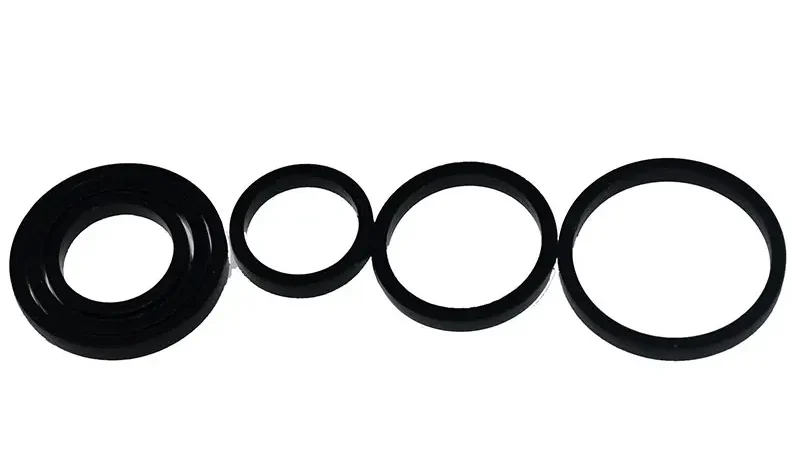
How to match a silicone seal to your application
The fastest way to a shortlist is to answer five questions in order and let each answer eliminate options.
- What temperature range will the seal see, including start-up, shutdown, and cleaning cycles? Anything below −40°C or above +150°C pushes the choice toward silicone.
- Is the joint long and linear, flat, or grooved? That answer selects strip, gasket, or O-ring before any other consideration.
- How much clamping force is available, and how flat are the surfaces? Low force or rough surfaces call for softer compounds.
- What will the seal touch—oils, solvents, steam, or food? Regular contact with oil usually rules out standard silicone.
- Which regulations apply in the destination market?
Industry conclusions follow directly from those answers. Food and beverage equipment takes an FDA-compliant silicone seal gasket, often platinum-cured for lower extractables. Electronics enclosures take a medium-hardness silicone seal strip that keeps out dust and splash while surviving door cycles. Automotive and industrial machinery use 70 Shore. A silicone seal rings in grooves sized to match. Medical devices lean on platinum-cured compounds with documented biocompatibility.
Installation best practices by seal type
Most silicone seals that fail early were installed badly, not specified badly. The failure patterns differ by form factor, so does the technique.
Installing a silicone seal strip
Surface preparation decides whether an adhesive-backed strip survives. Clean the mounting surface with isopropyl alcohol and let it flash off completely; avoid solvents that leave residue. On porous or powder-coated surfaces, expect to use a primer. Apply the strip at room temperature, press it down firmly along its length, and roll it with a hand roller to push air out—do not just lay it in place. On long runs, butt the ends squarely rather than stretching the strip, because stretched silicone shrinks back and opens the joint. For doors and panels that cycle frequently, prefer channel or clip retention over adhesive.
Installing a silicone seal gasket
Flange faces must be clean, dry, and undamaged; a scratch across a sealing face becomes a leak path. Center the gasket on the faces and keep it out of the flow path. Tighten bolts in a crisscross sequence in stages rather than walking around the ring once, so the gasket compresses evenly. Do not exceed the recommended compression: squeezing a silicone seal gasket harder does not seal better; it only accelerates set and can split thin sections.
Installing a silicone seal ring
Inspect the groove for burrs, machining marks, and old material before fitting anything. Lubricate the O-ring with a lubricant compatible with silicone, since some petroleum greases attack certain compounds; silicone grease or the process fluid itself usually works. Slide the seal into the groove without stretching it more than a few percent, and never roll it over ports or sharp edges—a nick across the cross-section becomes a leak. After assembly, check that the ring has not twisted in its groove, because a twisted silicone seal ring leaks along the twist.
Using silicone seal tape
Self-fusing silicone tape has no adhesive, so technique carries the joint. Wrap in the direction that tightening will continue to cinch, stretch the tape moderately as you go, and overlap each turn by about half the tape width. Finish with a turn laid flat and pressed down. The wrap fuses to itself within minutes and is permanent, which makes it a repair and protection method rather than a removable fitting.
Common failure causes and how to avoid them
When a silicone seal fails early, the cause is usually one of six things, and most of them are controllable at specification or installation time.
| Failure cause | What it looks like | How to avoid it |
|---|---|---|
| Over-compression | Permanent flattening, split edges | Match hardness to the gap; follow compression limits |
| Under-compression | Leak from day one | Recalculate gap and tolerance stack |
| Surface contamination | Strips lifting; leaks at flange faces | Solvent-clean and dry before fitting |
| Chemical incompatibility | Swelling or softening near oils and solvents | Check compatibility data or switch polymer |
| Installation damage | Nicks and cuts across the cross-section | Use blunt tools; never roll O-rings over edges |
| Heat beyond rating | Hardening and cracking after thermal cycles | Leave temperature margin above worst case |
What to include in a custom silicone seal RFQ
A vague RFQ returns vague quotes. The more of the following you specify up front, the closer the first quote lands to the part you need.
- Full dimensions with tolerances, referenced to ISO 3302-1 tolerance classes for rubber products
- Shore A hardness, and whether it is a firm requirement or a starting point
- Service temperature range and duty cycle
- Certifications required: FDA, EU 1935/2004, USP Class VI, REACH, RoHS
- Cure system preference where purity matters: platinum-cured versus peroxide-cured
- Color and any batch traceability requirements
- Expected order quantity and target lead time
If the application calls for a custom silicone rubber O-ring, include the groove dimensions and the media being sealed as well, because the supplier can verify squeeze and fill percentages before quoting. Suppliers who mold and extrude in-house can also flag a specification that will not survive the application, which is far cheaper to fix at the RFQ stage than after installation.
Häufig gestellte Fragen
Is silicone seal tape the same as Teflon tape?
No. PTFE thread-seal tape is a thin film for sealing metal pipe threads. Self-fusing silicone seal tape is a thicker, stretchable wrap for hoses, cables, and irregular joints, and it does not work as a thread sealant. The two solve different problems.
How long do silicone seals last outdoors?
Silicone resists UV and ozone far better than organic rubbers, and outdoor service lives of 10 to 20 years are commonly cited for well-specified weatherseals. Compression state, mechanical wear, and temperature cycling shorten that. Inspect annually and replace the seal once it takes a visible set.
Can a silicone seal be reused after removal?
Generally no. A compressed gasket or O-ring takes a set and will not return to its original shape, and adhesive-backed strips and self-fusing tape are single-use by design. Plan on a new seal for every disassembly.